
The mountains alter the rhythm of the wedding, the way guests come together and the quality of attention people bring to the days they share.
A destination that asks everyone to arrive, not simply to attend.
When guests travel to the Dolomites, the wedding begins before the ceremony. The journey separates the celebration from ordinary routines and creates a sense of anticipation that is difficult to reproduce in a familiar setting. Once there, the scale of the landscape encourages people to slow down, remain together and experience the days with greater attention.
This is one of the region’s most valuable qualities. The mountains do not function as a visual theme; they influence the emotional atmosphere, making even refined celebrations feel grounded, private and connected to something larger than the event itself.
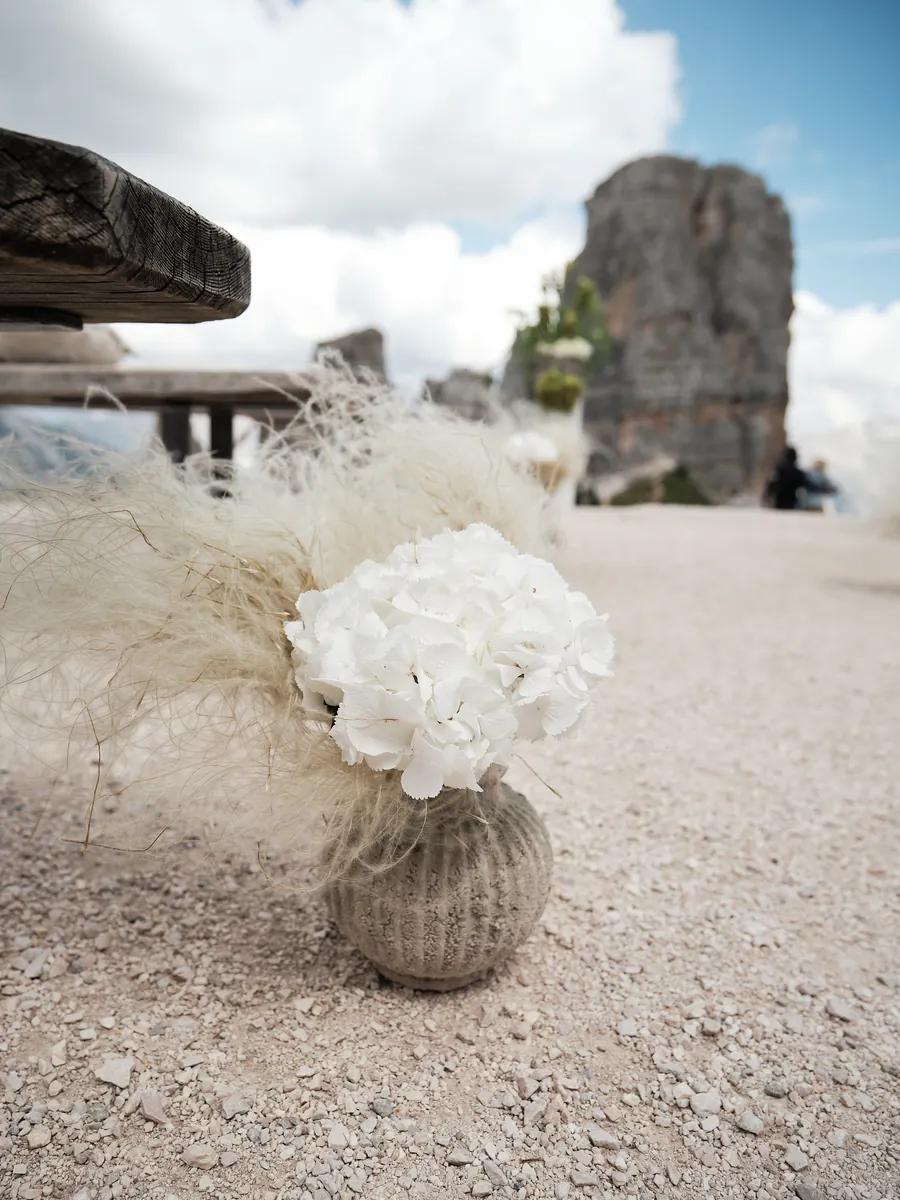
Every season offers a different Dolomites, and therefore a different wedding.
Summer brings long days, green meadows and the possibility of moving more freely between indoor and outdoor settings. Autumn introduces quieter colours and a more contemplative mood, while winter creates intimacy through snow, shorter light and the warmth of alpine interiors. Spring can be beautiful, but in the mountains it must be considered with particular care because conditions and accessibility vary significantly.
Choosing the season should never be reduced to an aesthetic preference. It affects guest travel, venue availability, transfers, clothing, timing and the type of experience that can be offered. A well-planned wedding embraces these conditions rather than treating them as obstacles.
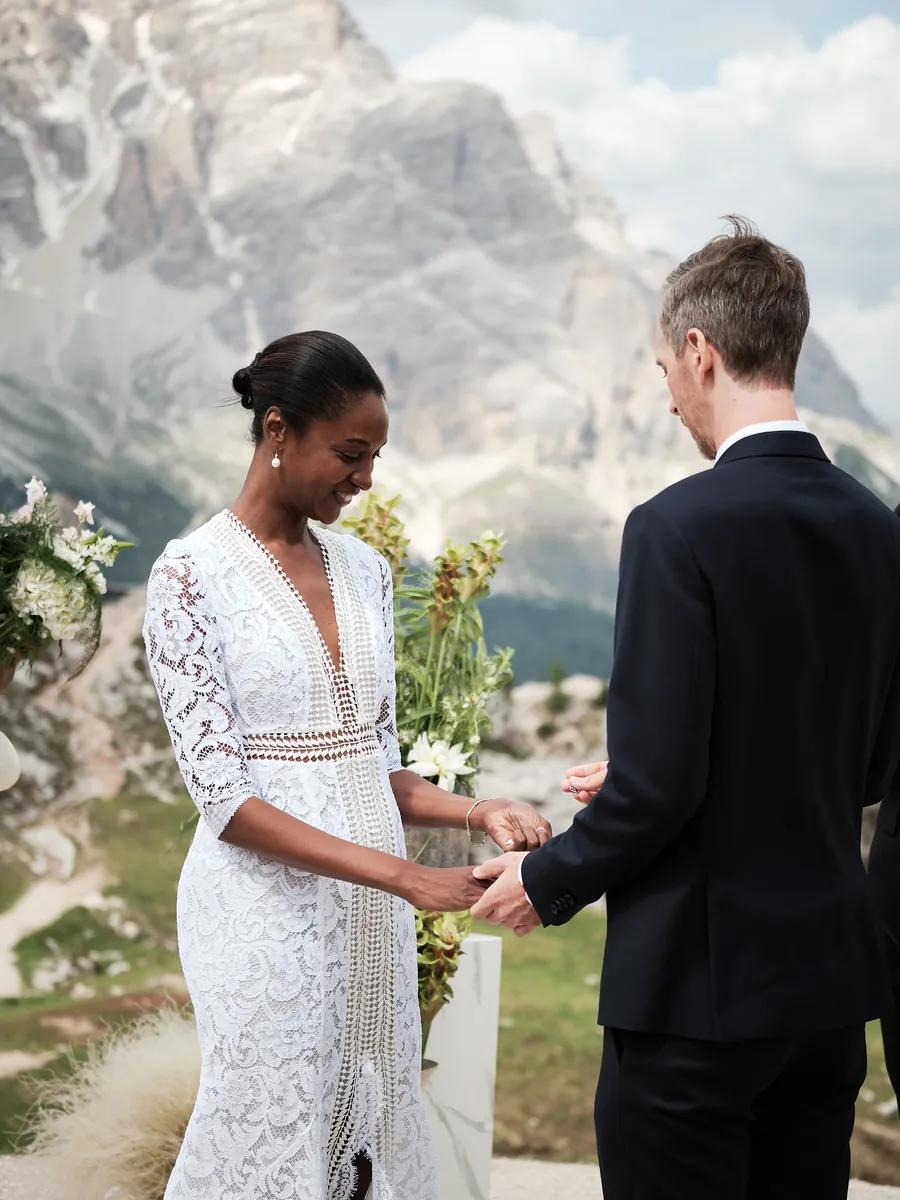
The grandeur of the landscape can create an unexpected form of intimacy.
In more familiar destination wedding locations, beauty often comes with visibility and crowds. The Dolomites can offer a different experience, particularly when the correct area and venue are selected. The celebration feels removed from the usual social stage, allowing guests to remain focused on one another and on the reason they have travelled.
Privacy, however, is not automatic. It depends on access, season, public use of the location and the organisation of guest movements. Viviana evaluates these factors so that the desired sense of seclusion is supported by reality.
The mountains reward preparation.
A mountain wedding brings practical questions that are less common in cities or traditional resorts: how guests will reach a venue, whether a location is suitable for every age, how weather alternatives will work, what time the light changes and how suppliers can operate at altitude. These details are not the unromantic side of the wedding. They are what protect its beauty.
When addressed early, logistics become part of the creative design. A transfer can become a graceful transition; an indoor alternative can feel as considered as the original plan; a shorter programme can create more emotional space. The goal is not to eliminate the character of the mountains, but to work intelligently within it.
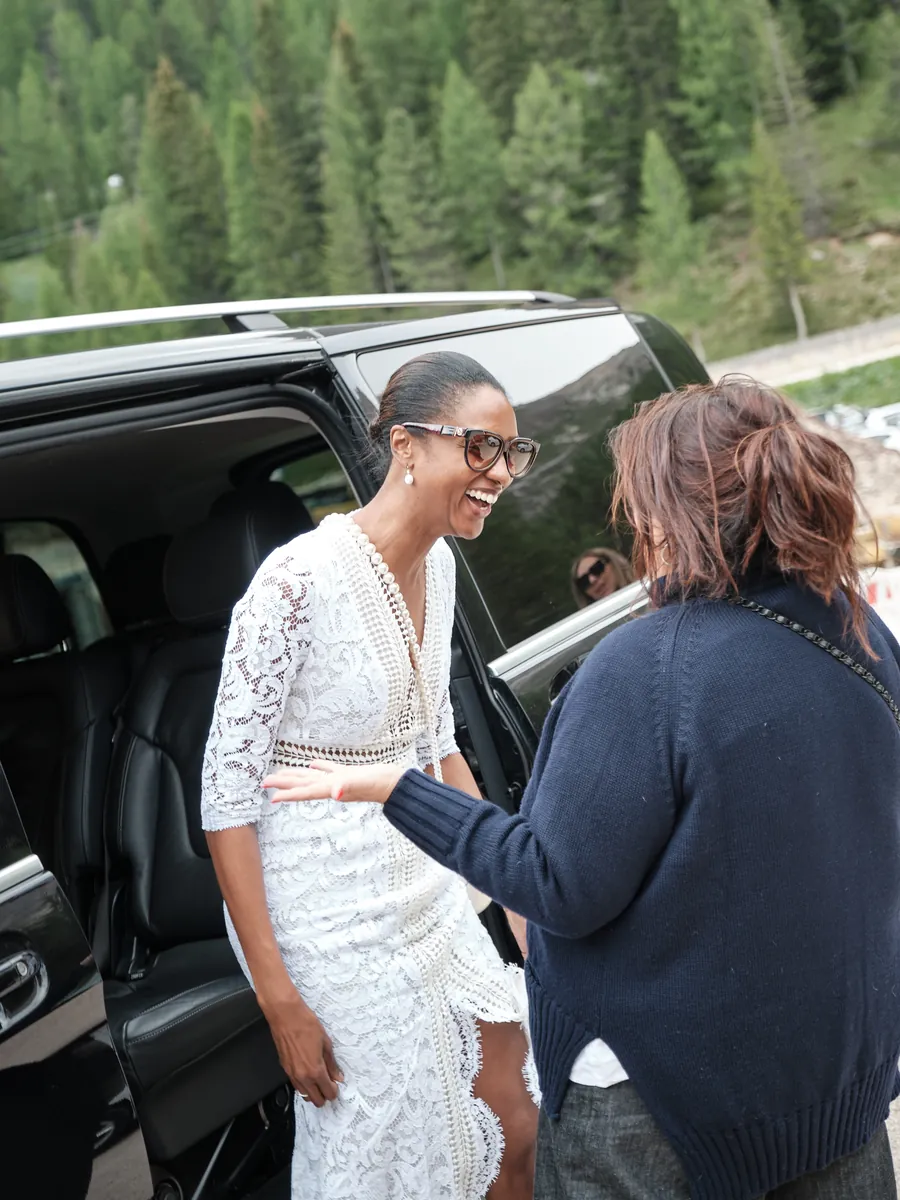
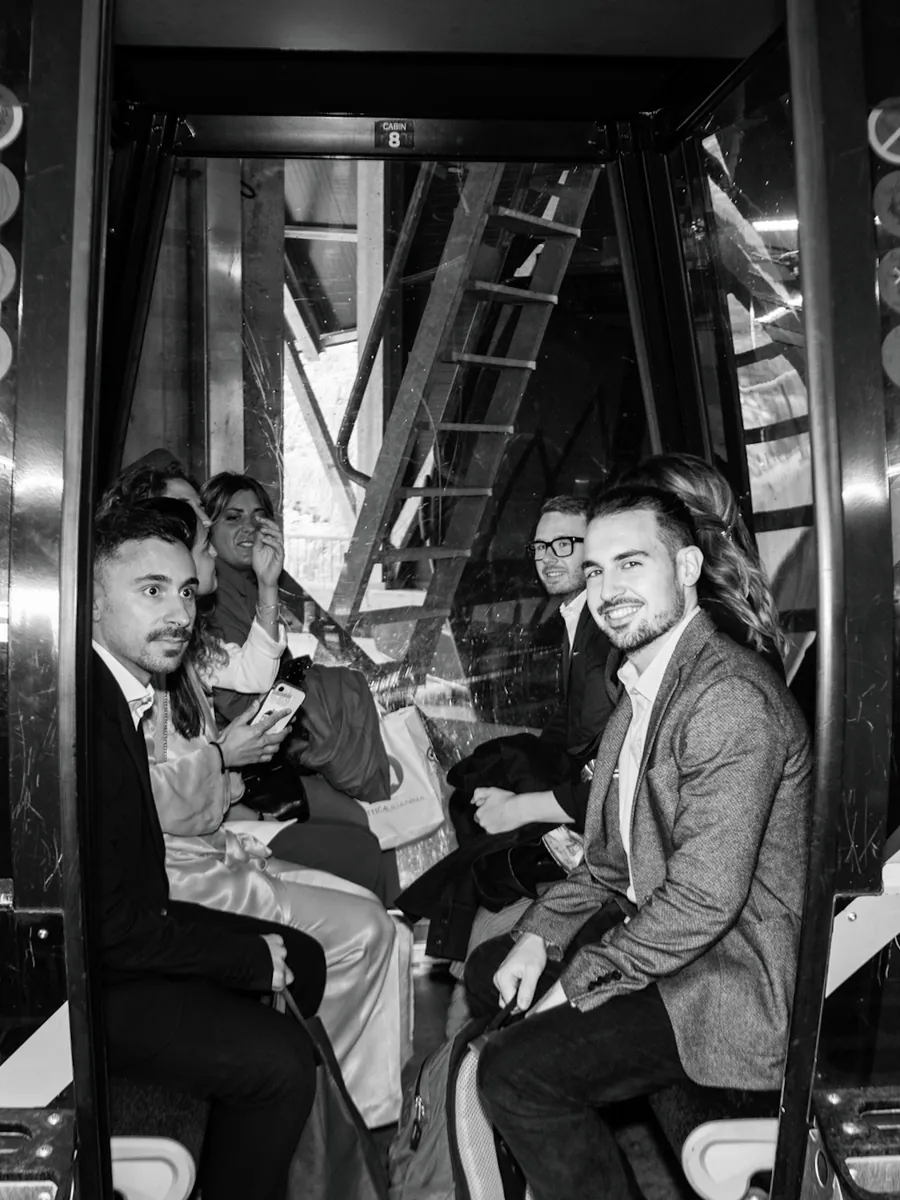

A wedding journey your guests will remember as their own experience, too.
International guests need clear information, thoughtful accommodation choices and a programme that balances shared events with time to discover the destination. They should feel guided without being over-directed, and cared for without losing the sense of personal travel.
The Dolomites make this balance possible through food, walks, mountain hospitality and the simple pleasure of being together in a place that changes daily habits. When the guest journey is planned with the same attention as the ceremony, the wedding becomes a collective memory rather than a single formal occasion.
Before choosing a venue, understand the destination.
The complimentary guide, “5 Essential Tips for Planning a Wedding in the Dolomites”, introduces the first practical decisions international couples should consider, including seasonality, access, contingency planning and guest experience. It is designed to help you ask better questions before the project begins.